

Last Updated: November 2, 2026
Quick Summary
To find support groups for secondary trauma, start with verified sources like the SAMHSA trauma-informed approaches page and the National Center for PTSD, then check hospital community boards, employee assistance programs, and faith or community centers. Online groups offer a private option, and asking direct questions about facilitation and confidentiality helps you choose a good fit.
- A scoping review found peer support and trauma-specific supervision showed promise for reducing secondary traumatic stress.
- Online groups can feel safer for people in rural areas or small towns where privacy matters.
- Ask whether a group is peer-led or clinician-led and how many people attend before joining.
- Listening counts as full participation, and you can pass when it is your turn.
- If symptoms affect sleep, work, or relationships, trauma-focused therapy may help beyond a group.
Table of Contents
- Why Support Groups Help with Secondary Trauma
- Where to Look for Missouri Trauma Support Groups
- Online Trauma Support Groups: A Private Option
- Support Groups for Caregivers and Helping Professionals
- Questions to Ask Before Joining a Support Group
- What to Expect in Your First Support Group Meeting
- When a Support Group Is Not Enough
- Taking the Next Step with Life Balance Counseling
- Frequently Asked Questions
AI-assisted article. Clinically reviewed by Yael DiPlacido, MSW, LCSW.
Why Support Groups Help with Secondary Trauma
Secondary trauma is the emotional strain that comes from hearing about or witnessing another person’s pain, often through work or caregiving. If you are learning how to find support groups for secondary trauma, you are already taking a brave step. Life Balance Counseling supports helping professionals and caregivers across Missouri, and this guide walks through where to look, what to ask, and what to expect.
A support group gives you a room, in person or online, where others understand the weight you carry. You do not have to explain yourself from scratch. That shared understanding can ease isolation and help you feel less alone in the work.
A scoping review of vicarious-trauma interventions found that interventions like peer support and trauma-specific supervision showed promise for reducing secondary traumatic stress, compassion fatigue, and burnout.
Where to Look for Missouri Trauma Support Groups
Start with trusted, verified sources rather than a random search. The SAMHSA trauma-informed approaches page lists ways to find a support group or local program. The National Center for PTSD also explains peer support groups and how to locate them.
For Missouri-specific options, a vetted directory saves time.
A few places to check:
- Hospital and clinic community boards
- Employee assistance programs at your workplace
- Faith and community centers that host peer groups
- State and national directories like the ones above
Online Trauma Support Groups: A Private Option
Online trauma support groups meet by video or phone, which can feel safer if privacy matters to you. They work well for people in rural areas or small towns where everyone knows everyone. You can join from home and keep your participation private.
When you look at online options, check a few basics first:
- Who leads the group, and are they trained?
- Are there clear privacy and confidentiality rules?
- Is the group moderated and size-limited?
- Does the platform feel secure to you?
Some people worry that online groups feel impersonal, and the experience varies from group to group.
Support Groups for Caregivers and Helping Professionals
Caregivers and helping professionals often carry secondary trauma quietly. Nurses, teachers, therapists, social workers, and family caregivers give a lot of themselves. A group built for people in these roles can reduce the sense of being misunderstood.
Look for groups that focus on your specific role. The scoping review of vicarious-trauma interventions described peer-support networks and trauma-specific supervision as promising supports. If you want to read more about the toll of caregiving work, this article on compassion fatigue in healthcare workers explains how to recognize and recover.
For helping professionals who want support beyond a group, therapy for helping professionals offers a private, tailored space. If individual sessions are not quite the right fit, online couples therapy and communication training can also help when secondary trauma is straining a relationship at home.
Questions to Ask Before Joining a Support Group
Ask direct questions before you commit. Good facilitators welcome them. Clear answers help you decide if a group is a good fit.
Use this checklist:
- Who facilitates the group, and what training do they have?
- Is it peer-led or clinician-led?
- What are the confidentiality rules?
- How many people attend, and is it capped?
- Is it drop-in or a closed group that meets for a set time?
- What is the focus: coping skills, processing, or both?
- Are there ground rules about sharing and respectful listening?
- Does it feel safe to observe before speaking?
| Question | Why It Matters | Good Sign |
|---|---|---|
| Who leads it | Sets safety and skill | Trained, clear facilitator |
| Confidentiality rules | Protects your privacy | Written, explained up front |
| Group size | Affects comfort | Capped, not overcrowded |
| Structure | Predictability | Clear format each meeting |
What to Expect in Your First Support Group Meeting
Most first meetings are calmer than people expect. You will likely hear ground rules, a short check-in, and a chance to just listen. You do not have to share anything until you feel ready.
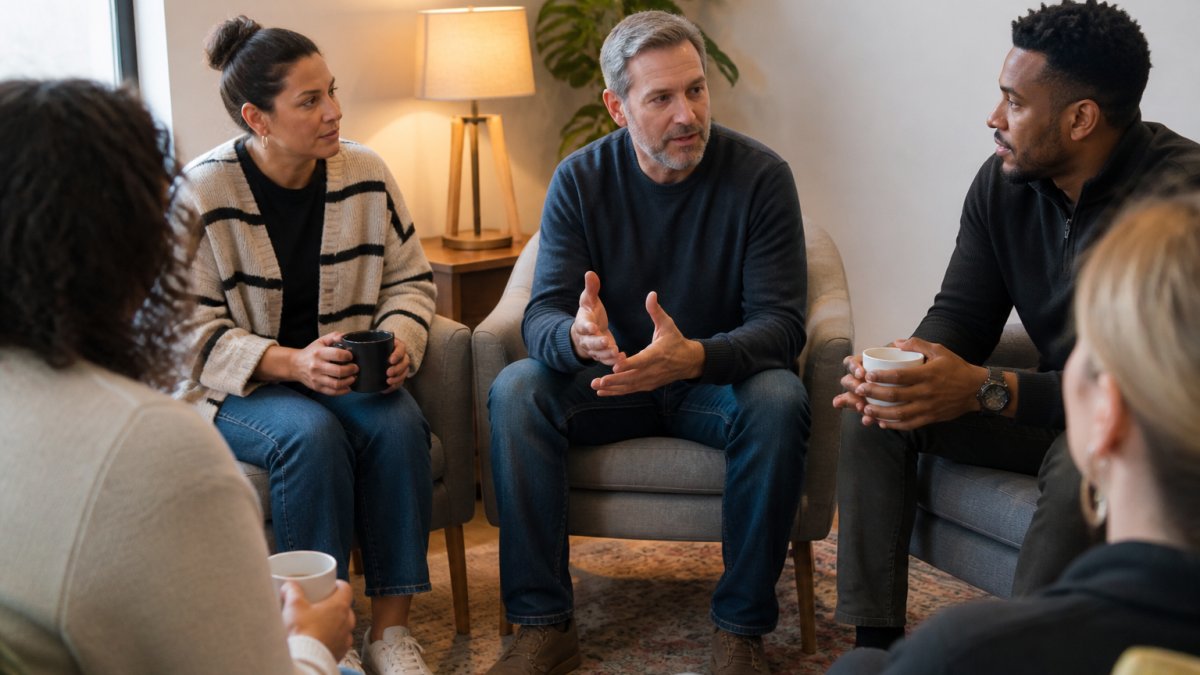
A few things to know:
- Listening is full participation. You can pass when it is your turn.
- Facilitators usually set boundaries to keep the space respectful.
- It is okay to feel emotional. That is often part of the work.
- You can try one meeting and decide later.
Watch out: pushing yourself to share deeply in the first meeting can leave you raw afterward. Go at your own pace and talk with the facilitator if you need support.
When a Support Group Is Not Enough
A group can help, but it is not a substitute for treatment. If symptoms persist, deepen, or start to affect sleep, work, or relationships, trauma-focused therapy may help. A group offers connection; therapy offers focused, individualized care.
Trauma-focused approaches such as EMDR and parts work can help people process what they carry. These are general options, not a promise of results. To learn about one path, explore EMDR and trauma therapy. A qualified professional can help you decide what fits your situation.
If you are in immediate danger, call 911. If you are thinking about suicide or self-harm, contact the 988 Suicide & Crisis Lifeline by calling or texting 988.
Taking the Next Step with Life Balance Counseling
Finding the right support takes patience, and you do not have to sort it out alone. Life Balance Counseling offers online therapy for helping professionals, caregivers, and high-functioning adults across Missouri. The practice is led by Yael DiPlacido, MSW, LCSW, and provides trauma-informed care that includes EMDR and parts work.
Care is offered online, from the privacy of your own space, for people in rural and metropolitan communities across Missouri. If a group alone does not feel like enough, therapy can add focused support.
You can contact Life Balance Counseling to ask about online therapy options across Missouri.
Frequently Asked Questions
What is secondary traumatic stress?
Secondary traumatic stress is the emotional and physical strain that can occur when you are repeatedly exposed to another person’s trauma through your work or caregiving. It can show up as intrusive thoughts, exhaustion, irritability, or feeling detached. It is not a sign of weakness. A scoping review of vicarious-trauma interventions described supports like peer networks and trauma-specific supervision as showing promise for reducing secondary traumatic stress, compassion fatigue, and burnout. If symptoms feel overwhelming, a licensed professional can help you understand what you are experiencing.
Are online support groups for secondary trauma effective?
Online trauma support groups can be a practical option, especially if you live far from in-person meetings or value privacy. They offer connection from your own space and can make it easier to fit support into a busy schedule. A scoping review of vicarious-trauma interventions noted that peer-support networks are a promising intervention for secondary traumatic stress. Effectiveness depends on the group’s structure, facilitation, and fit for you. Look for groups with clear ground rules, trained facilitators, and a format that feels safe.
Can a support group replace therapy for secondary trauma?
A support group can be a valuable part of your support system, but it is not a substitute for individual therapy when symptoms are significant. Groups offer connection, shared understanding, and practical ideas. Therapy offers personalized assessment and treatment for trauma and burnout. Many people use both. If secondary trauma is affecting your sleep, relationships, or ability to function, consider talking with a licensed therapist. Life Balance Counseling offers online therapy for helping professionals and caregivers across Missouri.
What can I do if a support group feels overwhelming or unsafe?
It is okay to leave a group that does not feel safe. You can step out of a meeting, take a break, or decide not to return. Before joining, ask about ground rules, confidentiality, and how the facilitator handles difficult moments. If a group feels overwhelming, talking with a therapist can help you process what came up. If you are in immediate danger, call 911. If you are having thoughts of suicide or self-harm, contact the 988 Suicide & Crisis Lifeline by calling or texting 988.


Leave a Reply